
Which Cleaner Should I Use on My Stone Surfaces?
A Pro’s Guide to Cleaning Natural Stone Safely and Effectively
Stone surfaces elevate the elegance of any space—but they also demand precision and knowledge when it comes to cleaning. Whether you're maintaining a luxury marble bathroom or restoring shine to a slate entryway, one thing is non-negotiable: use the right product for the right stone.
As a cleaning professional, understanding stone types and chemical compatibility is part of delivering expert-level results. Let’s break it down.
Not All Stones Are Created Equal
Natural stone surfaces vary widely in composition, porosity, and hardness. The wrong cleaner can cause:
-
Etching (visible dull spots)
-
Discoloration or whitening
-
Permanent surface damage
That’s why pros learn to match pH level and cleaning strength to the type of stone. Here’s what you need to know.
SH-CLEAN — The Gentle Solution for Delicate Stones

Some stones are naturally soft and rich in calcium, making them highly reactive to acidic or harsh alkaline cleaners. These include:
-
Marble – Elegant but easily etched by acid
-
Limestone – Porous and prone to staining
-
Travertine – Often filled and polished, but still delicate
-
Terrazzo – A composite that can degrade with the wrong pH
-
Sealed wood floors and lacquered surfaces – Need neutral formulas to preserve finish
SH-Clean was designed with these surfaces in mind. It’s pH neutral, non-reactive, and safe for frequent use without dulling or damaging the stone.
Why Cleaning Pros Choose SH-Clean:
-
Gentle on polished finishes
-
Leaves no streaks or chemical residue
-
Helps maintain the integrity and longevity of sensitive surfaces
-
Ideal for maintenance cleaning of high-end flooring
Pro Insight: If the stone is calcium-based (like marble or travertine), assume it’s vulnerable to acids—even mild ones. SH-Clean gives you a worry-free clean.
RED JUICE — The Power Cleaner for Tough Stone & Grime

Some stones are more durable and less reactive—but they’re often used in grime-heavy areas like showers, entryways, and countertops. Think:
-
Granite – Hard and resilient, but needs degreasing
-
Quartz – Engineered stone, great with non-abrasive cleaners
-
Slate – Textured and rustic, often traps soil
-
Sandstone – Porous but durable
-
Quartzite – Very hard, good for bathrooms and kitchens
-
Natural stone in showers – Soap scum, mildew, body oils
These surfaces can take more aggressive cleaning, especially in wet environments where buildup forms fast.
Red Juice is a non-toxic, odorless alkaline degreaser that’s safe for stone, yet powerful enough to cut through:
-
Soap scum
-
Body oils
-
Product residue
-
Bathroom grime
Why Cleaning Pros Love Red Juice:
-
No harsh fumes or toxicity concerns
-
Saves time with fast action
-
Doesn’t damage grout, stone sealers, or fixtures
-
Perfect for vertical surfaces (showers!) where time matters
Pro Insight: Red Juice is your go-to when speed and power matter. Pair it with the right tool—like a microfiber pad or scrub brush—for best results.
When in Doubt, Identify First
Not sure if that white stone is marble or quartz? Spot testing may not always reveal the difference—some changes happen gradually over time with repeated use of the wrong cleaner.
The safest approach is to identify your stone type before choosing a product. You can:
• Contact your countertop installer or supplier
• Check the original purchase documents
• Look up visual characteristics online from trusted sources
Speed Cleaning Makes It Simple:
-
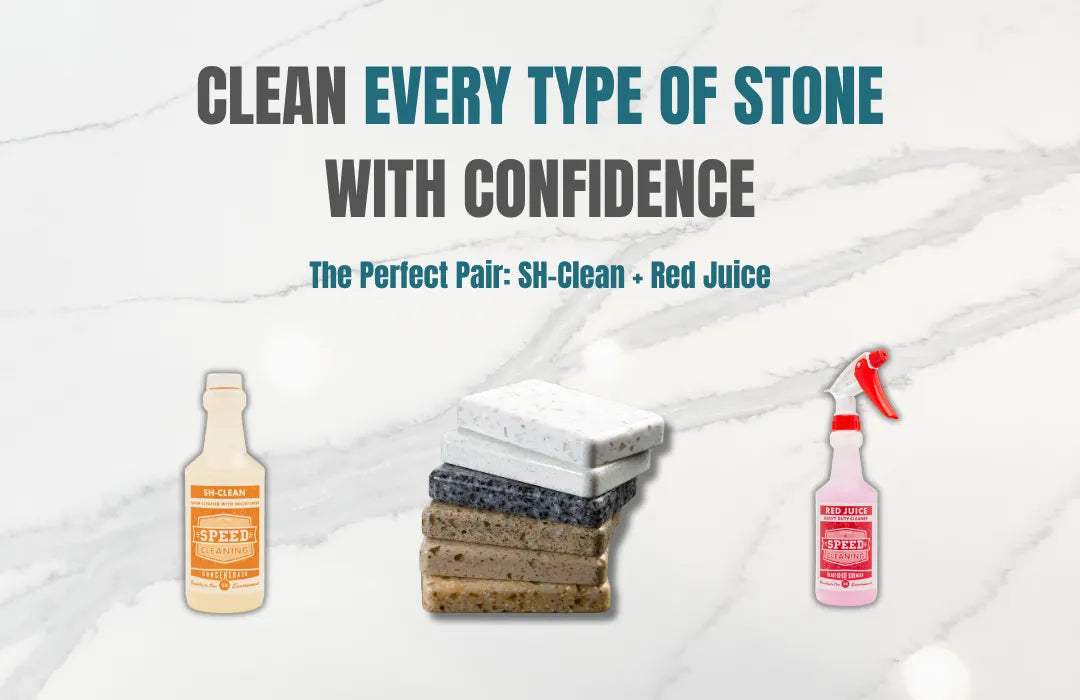
Use SH-Clean for delicate, calcium-based, or sealed surfaces.
-
Use Red Juice for durable stone, bathrooms, and heavy-duty grime.

Final Word: The Pro Difference
As a professional, your clients expect you to protect their home as well as clean it. Knowing how to handle natural stone separates average cleaners from true experts.
Red Juice and SH-Clean aren’t just products—they’re tools in your professional arsenal.
Use them with confidence, knowing you’re delivering the safest, smartest clean for every surface.
Share

